
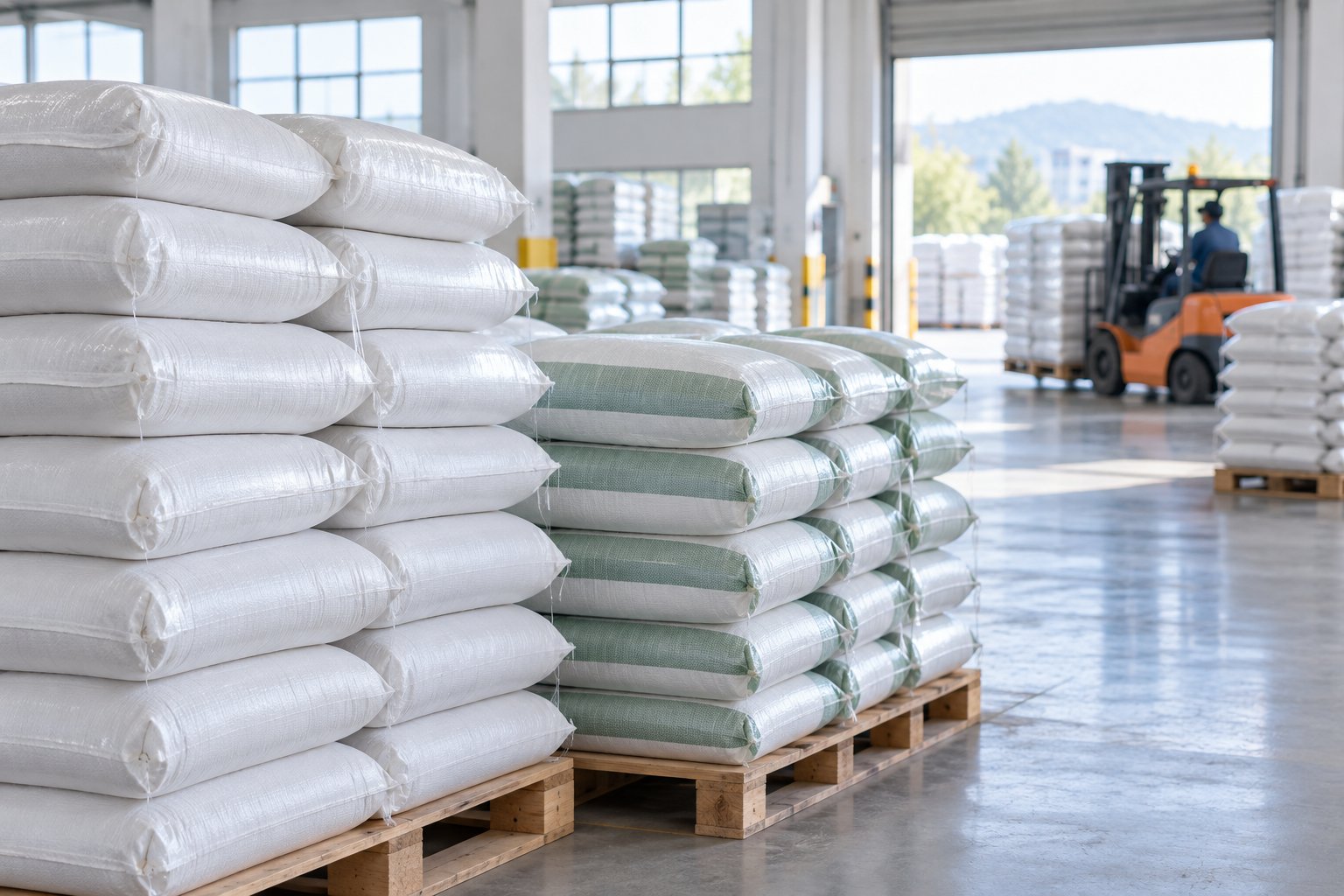
Woven polypropylene (PP) bags are the standard packaging for cement, animal feed, fertilizer, grain and similar bulk materials because they combine high tensile strength with a low cost per kilogram carried. Getting the specification right matters more than it looks — an under-specified bag fails in the supply chain, not in a lab.
Start with fabric weight and fill weight
Woven fabric is specified by denier (yarn thickness) and by fabric weight, usually expressed in grams per square meter (GSM). Heavier fabric costs more per bag but tolerates rougher handling, stacking and longer storage without tearing. As a starting point, match the fabric weight to the fill weight and the number of times the bag will be handled between filling and end use — a bag that is only forklift-palletized once needs less margin than one that will be manually stacked and restacked at a rural distribution point.
UV stabilization for outdoor storage
Unstabilized polypropylene degrades under UV exposure, becoming brittle and losing tensile strength within months outdoors. If bags will be stored outside — a common reality for cement and fertilizer even when it is not the original plan — specify a UV-stabilized fabric with a masterbatch dosage suited to the expected storage duration. This is a cheap addition at the fabric stage and an expensive failure to discover after a shipment has already sat in a yard.
Liners: when the woven fabric alone is not enough
Woven fabric has gaps between the yarns that are fine for coarse products like large-grain fertilizer or big lump materials, but not fine enough to hold back cement dust, flour, or fine feed powder, and not moisture-resistant on their own. A laminated coating (typically BOPP) closes the weave and adds a moisture barrier for products like cement; a separate inner liner (often a PE film pouch inside the woven outer bag) is common for very fine or moisture-sensitive powders and for products needing an additional food-contact-safe inner surface.
Closure and format
Valve bags (filled through a small valve, then self-sealing) suit high-speed automated filling lines and powders like cement; open-mouth bags with a sewn or heat-sealed top suit lower-speed or manual filling and coarser products like grain or feed. Confirm your filling equipment's bag format before finalizing the specification — retrofitting a filling line to a different bag style is a bigger cost than adjusting the bag order.
Before placing a bulk order, it is worth requesting a small pre-production sample batch to confirm seam strength, print quality and liner adhesion under your actual filling and stacking conditions, rather than relying on the fabric specification alone.