
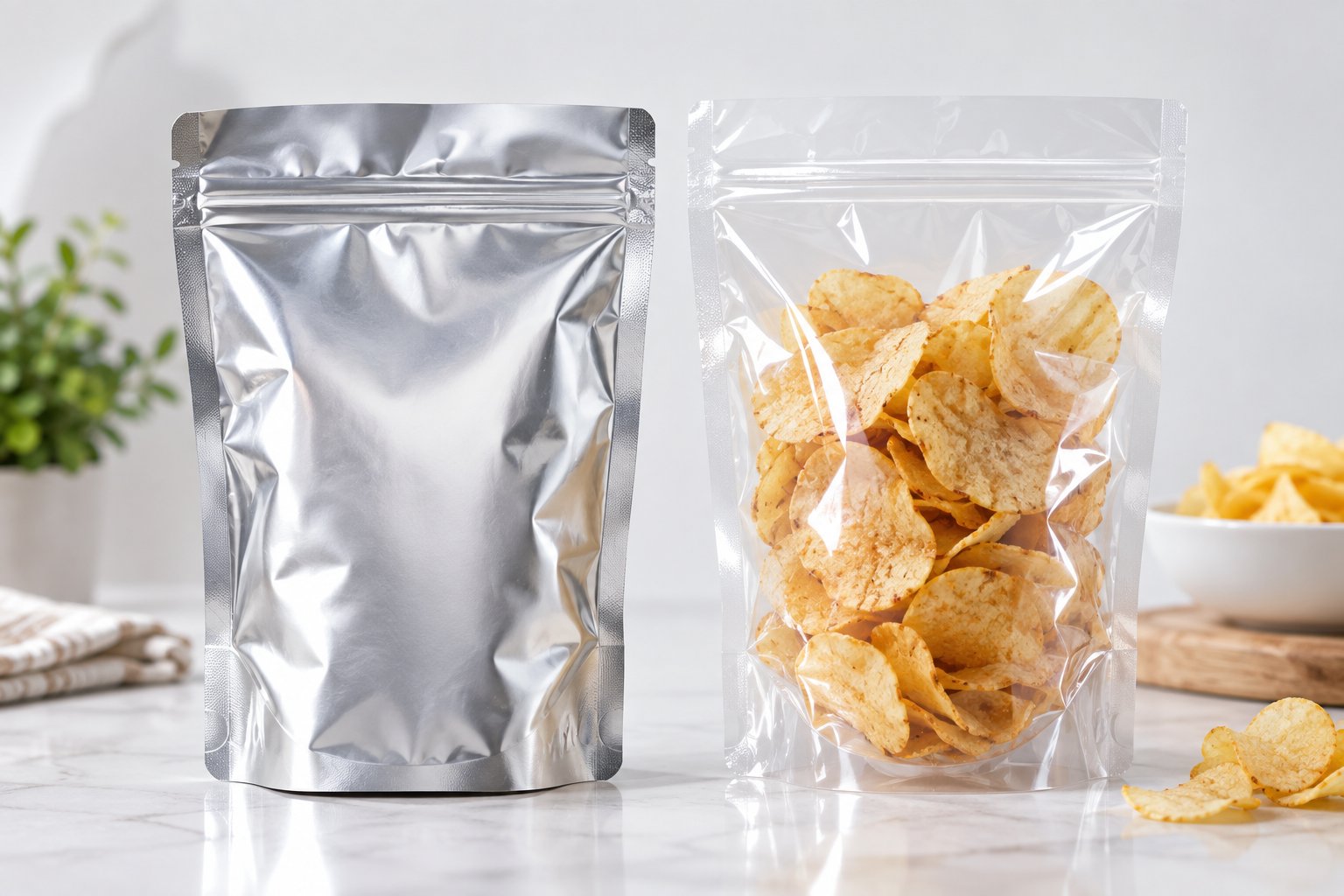
Coffee, snacks and dry ingredients do not spoil the way fresh food does — they lose quality through oxidation, moisture pickup or light exposure. "Barrier" packaging is built to slow one or more of those pathways down, and the right choice depends on which pathway is doing the most damage to your specific product.
Metallized film: strong, economical barrier
Metallized film is produced by vacuum-depositing a very thin layer of aluminum onto a base film such as BOPP or BOPET. The metal layer meaningfully improves resistance to oxygen, moisture and light transmission compared to the unmetallized base film, at a lower cost than most alternative high-barrier structures.
The trade-off is opacity: metallized film is not transparent, so it suits products where a matte or shiny metallic look is acceptable or desirable — coffee, chips, confectionery — rather than packs where the customer expects to see the product through the pack.
Clear high-barrier film: visibility with a smaller trade-off
When shelf presentation calls for product visibility, a transparent high-barrier film is the usual alternative. These typically use a specialty barrier resin layer (such as EVOH) or a thin, transparent oxide coating (such as AlOx or SiOx) to reduce oxygen and moisture transmission while keeping the pack see-through.
Transparent barrier structures generally cost more than metallized film for an equivalent barrier level, and the barrier resin layer can be moisture-sensitive itself in some formulations, which is worth checking against your product's expected storage humidity.
Matching the barrier to the target
Start with the shelf-life target and the dominant failure mode: is the product going stale from oxygen ingress, going soft or clumping from moisture pickup, or losing color/flavor compounds from light exposure? Oxygen- and light-sensitive products (roasted coffee, high-fat snacks) usually benefit most from metallized or foil-based structures. Moisture-sensitive but visually-driven products (some confectionery, bakery items) often justify the added cost of a transparent barrier film.
A packaging supplier can usually recommend a starting structure from the target shelf life and storage conditions, then confirm it with accelerated shelf-life or barrier testing before a full production run.